Spatiotemporal inhomogeneity of accuracy degradation in AI weather forecast foundation models: A GNSS perspective
Spatiotemporal inhomogeneity of accuracy degradation in AI weather forecast foundation models: A GNSS perspective
Spatiotemporal inhomogeneity of accuracy degradation
Top performer model of different area and forecast steps

Abstract
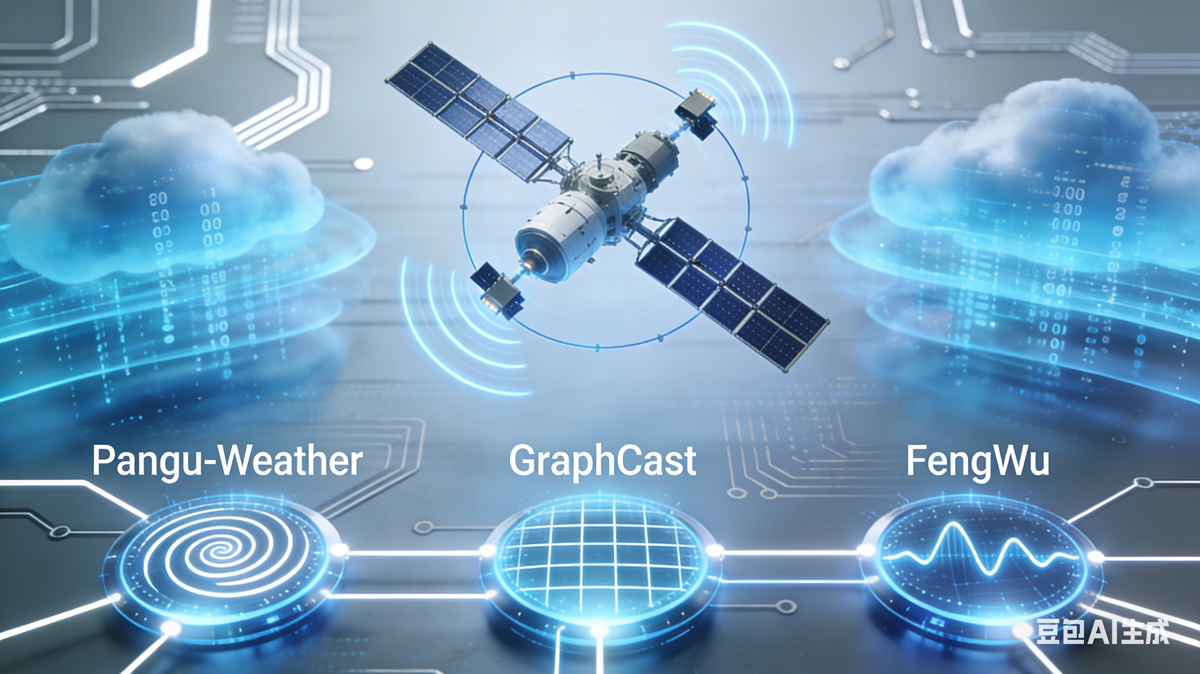
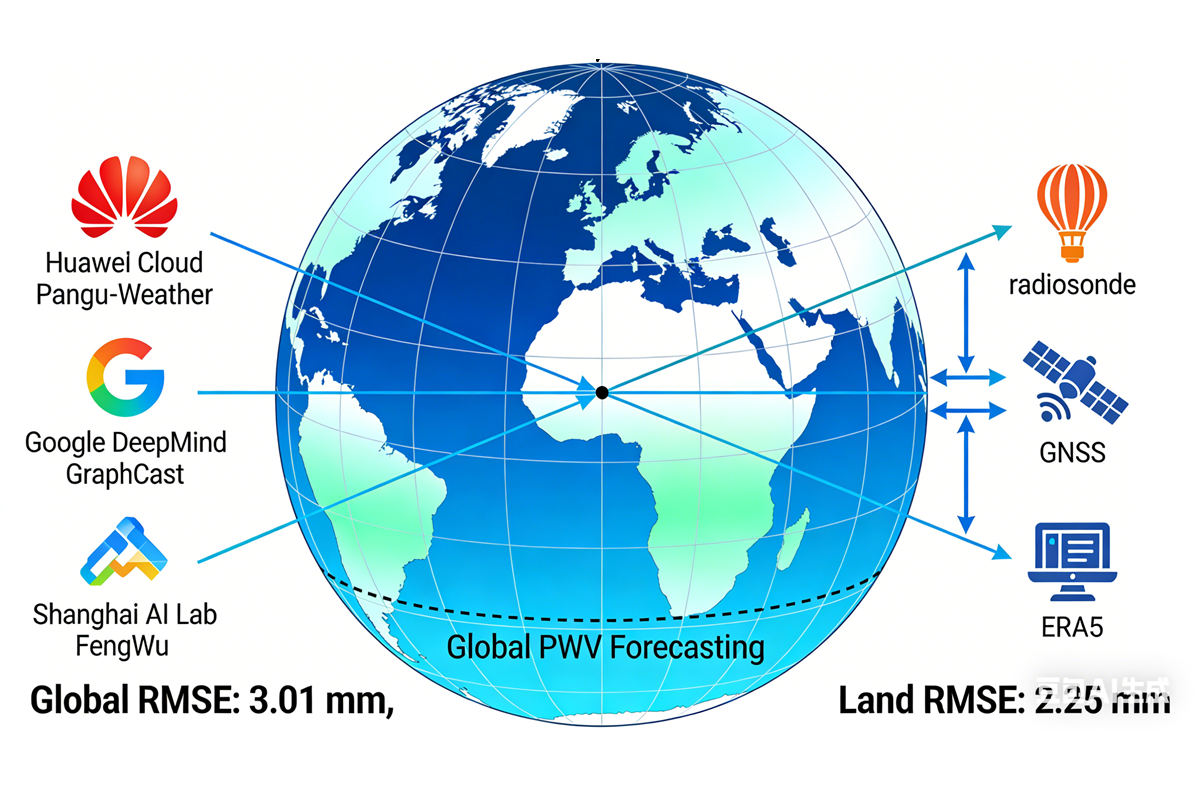
The artificial intelligence (AI) weather forecast foundation models can infer and generate precise global atmospheric state forecasts on the user’s device and with speed over 10,000 times faster than the operational Integrated Forecasting System (IFS), and it is making increasingly significant contributions to geodetic applications represented by the Global Navigation Satellite System (GNSS). However, existing studies on the investigation of these AI models are typically carried out by concentrating on specific one or several meteorological events in certain regions or by comparison with physical models, and the evaluation results obtained in this manner are not comprehensive and universal. Additionally, we find that the results obtained by the foundation models through the “rollout” method for forecasting are not uniform in terms of time and space. This temporal and spatial inhomogeneity of accuracy and accuracy degradation are related to AI algorithms and attributes of training data, etc., but these characteristics have not been thoroughly explored and analyzed. In this study, we obtained the global forecast results of foundation models for 2022 and subsequently derived the GNSS tropospheric delay through numerical integration. We calculated the mean deviation, mean absolute error, and root mean square error of these data. Using these metrics, we analyzed the spatiotemporal inhomogeneity in the accuracy degradation of foundation models, represented by Huawei Cloud Pangu-Weather, Google DeepMind GraphCast, and Shanghai AI Lab FengWu. We evaluated how this inhomogeneity changes with forecast time and identified the best-performing models across different regions and forecast durations. From the results, we find that taking topography into account when training the model enhances its accuracy at high altitudes, and the facilitating influence between the high related atmospheric variables such as precipitation and water vapor. The contributions of this study are twofold: it serves as a valuable reference for geodetic and remote sensing users employing foundational models, and offers insights and case supports for AI practitioners aiming to develop more accurate models for weather forecasting.
Related Projects
Related Links
BibTeX
Total Visits:
 Paper
Paper
 Supplementary Data
 WeChat